08 August 2005

Good Vibrations

The middle way is, in fact, the vibration between extremes.
A resonance, rather than a blinkered middle ground.
To tread the middle path requires intimacy with all the edges, and beyond.
Working in extreme territory will often give you the energy to leap to the next stage.
The path is like a series of stepping stones across a river.
The distance between the stones gradually increases, so your training has to be wholehearted and thorough otherwise you wont manage the next challenge.
It is well-nigh impossible to miss a stage out.
There is a Tai Chi saying: "The next stage is always the most difficult".
A student once stupidly said to me, "I'm really glad I didn't practice what you showed me last time because it has all changed now".
If the work is alive it will always be changing and developing, in form and energy. The students have to be constantly vigilant to these changes. Even if the Form looks exactly the same, try to feel how you, your teacher and the energy have subtly moved on.
Accept the challenge of the unknown rather than weakly clinging to the known.
This is the key to immortality.
07 August 2005

The adventurous state of mind is a high house.
To enjoy life the adventurous state of mind must be grasped and maintained.
The essential feature of adventure is that it is a going forward into unknown territory.
The joy of adventure is unaccountable.
Agnes Martin, 1912-2004

Texture

When you want to do something in Tai Chi, try doing the opposite first. So a left turn of the waist can be preceded by a small right turn, a sinking by a tiny rise, and a movement into the left foot by an initial kick into the right. The change from one to the other acts as a trigger - firing the spirit. When the main action finishes there will also be a small natural opposite reaction – to stop the waist turning to the right you effectively apply a left turn – clearly visible if the movements are light and spirited. So if we denote the main waist turn by a capital L or R and the small waist turns by small capitals then R becomes LRL. So, a string of three main waist turns, RLR becomes LRLRLRLRL. Each LR & RL pair effectively constitutes a tiny figure of eight in the waist.

Add to this the fact that the waist has two halves (as does everything – “the value of unity is two”) – the right side of the waist controlling the right side of the body, powered by the left leg, and vice versa – and that ideally each side of the waist moves independently of the other in order to control the relevant limbs, then even the simple postures of the Short Form become extremely elaborate.

This is what I mean by the Form needing to develop beyond what you were initially taught. The simple version remains the template, but within that there is a plethora of detail that will reveal itself if you practice with vital energy and a creative spirit.

06 August 2005

Brief Encounters


I love those chance meetings with strangers (although I certainly don't search them out - my failing). Strangers don't know you and tend not to encumber you with opinions and expectations. There can be a whole universe in a brief encounter, which can resonate through the rest of your life.

The job of the teacher is to see clearly your potential (destiny) and thrust you unmercifully into it. This is the opposite to friends and family who often hold you back with their selfishness and fears. John was always astonished that Dr Chi's family had no idea of his greatness. To them he was just a provider. There was so much he couldn't share with them and he had to remain somewhat aloof otherwise they would have drained him.

As you get deeper into your Tai Chi, any drain on your energy becomes a real impediment to progress. Best locate and excise. Or, if bound by duty and love, establish for yourself a circle of spiritual comrades and give each other all the encouragement and support necessary for you all to advance on a unified front. Strength in numbers.

The difference between support and disapproval can be subtle. People who claim to love you may still disapprove of your commitment to a teaching, which they may see as a weakness or slavishness. Hopefully your improving energy will win them over, but even this can be threatening to some. I remember one student whose wife gave him an ultimatum - it's either tai chi or me - because she was terrified that the positive changes he was undergoing would drive them apart (she was right). Unfortunately he made the wrong decision.

Real love does not attach, and certainly does not impede one's spiritual progress. Real love should be like that from your teacher: a burst of energy and connectedness that thrusts you into your destiny, no strings attached. If you find your soulmate then your destinies will be intimately bound up and you have companionship for the rest of your days. Next to finding a teacher, this is the ultimate good fortune.

There is no end to the teaching.
The pool is infinitely deep.
It's touch is constantly inspiring you to become more atuned - better connected.
There is no end to connectedness.
It will gradually deepen and transform if it is worked on.
The work strengthens and exposes your essential qualities.
Masculine - strength, sobriety, vulnerability.
Feminine - softness, sensitivity, omnipotence.
Within each of us there is an infinite richness.
Within the connexion there should be a similar infinite richness.
That's what life is.

Love

Prima materia
Elementum primordiale
Pure subject and the unity of forms
Root of itself
We glow together

05 August 2005

The heart energy I'm involved with both nourishes and is nourished by a particular thread of the Natural Process which the word destiny is an attempt to suggest.
John Kells

Sign of Progress

About 18 years ago my teacher was chatting to me at the old Wimpole Street centre. He asked how my practice was going. I told him that it seemed to be going through an unfruitful patch where everything I did seemed to be wrong and nothing felt right. "Ah, sign of progress", he said. He then thought for a while and added, "You have to believe that otherwise it wont be".

In a sense Tai Chi is a negative exercise in that it is all about removing conditioning, ego, hardness, in order to reveal and encourage our more subtle natural qualities such as essence, heart, softness. It stands to reason therefore that there are going to be regular periods of discomfort and darkness, especially in our solo practice. These are just times of internal conflict - the last desperate gasps of the old you putting up a valiant defence - and must be weathered cheerfully (unless you enjoy depression). I have seen so many students give up Tai Chi when they hit one of these walls. One student in particular gave up her very successful and well paid job in the city to devote herself to Tai Chi (she had some romantic notion of becoming a spiritual ascetic, living in a luxury flat in Hampstead). Within a week of her new life, practising about 3 hours a day, she hit a wall, and gave up Tai Chi almost instantly, never to do it again. The tragedy was that right at the end her energy was fantasic - strong and available - but she couldn't cope and nothing I could say would change her mind and bring her back. She had no negative capability, not at the time anyway. She went on to have children, without the support of a man, and had to learn that one in a hurry.

Back at the old Wimpole Street centre the Tai Chi syllabus was structured as so: Short Form, then the Long Form, then the Left Side Long Form, and then a time of what was called a Power Class, before going on to the Dance of Equality. Da Lu ran alongside these classes, as did extra pushing hands. The Form classes were basically about learning to relax whilst going through a rigorous and disciplined set of movements. This involved learning to use the turnings of the waist to direct the movements, the power for which was generated by the legs (single-weightedness). The Power Class was about strengthening the legs which meant sinking, hours and hours of it every day, and learning to fire your energy out - whipping the energy up from the ground, through the body and into the opponent. The Dance was about developing lightness and spirit. I was lucky in having 3 years of the Power Class, each week listening to my teacher find a new and inspiring way of getting us to willingly put up with the pain of sinking (I used to marvel at his powers of invention). One thing he said was that becoming stronger was like acting: you had to pretend you were strong and that would draw the strength to you. He used to get us to swell out into such huge ward-offs that the room felt barely able to contain us all: "Make yourself as large a vessel as possible and energy will naturally flood in". To eradicate self-image you have to first take it through various transformations. For me this meant changing from weak to strong to lively, etc. The process is still going on. Still polishing those facets, one by one.

04 August 2005

What is real is not the external form, but the essence of things . . . it is impossible for anyone to express anything essentially real by imitating its exterior surface.
Constantin Brancusi, 1876-1957

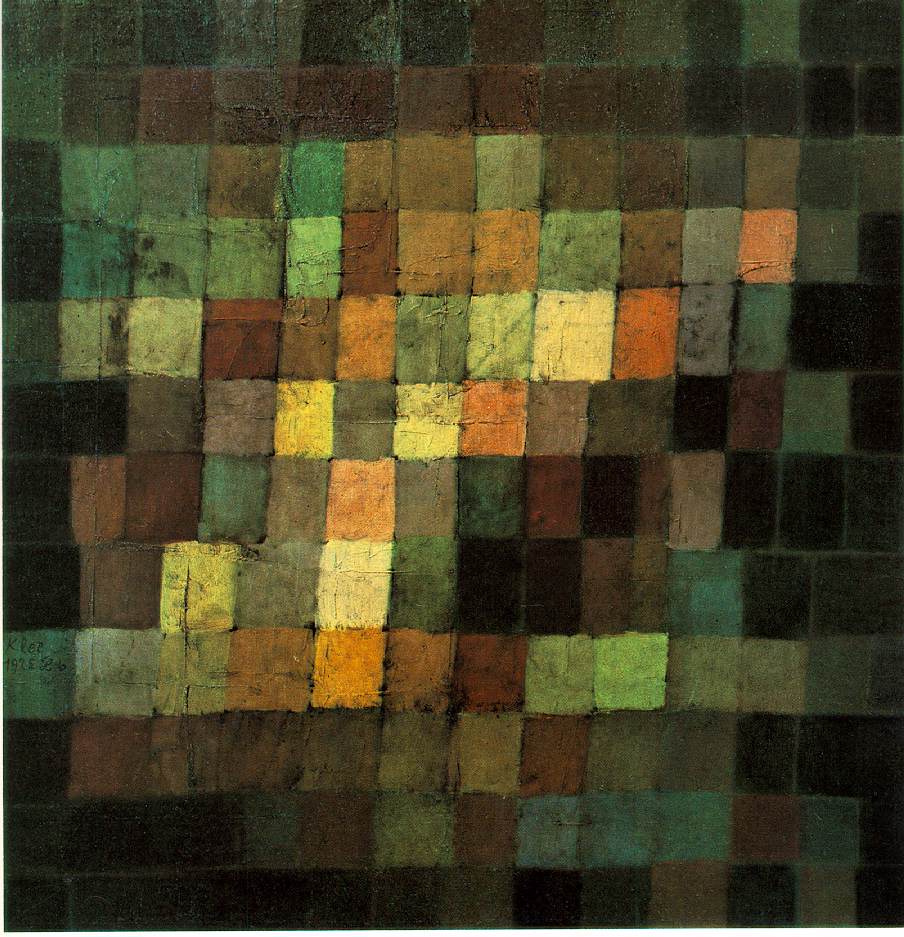
Paul Klee, Ancient Sound, 1925. "One eye sees, the other feels"

A chain is only as strong as its weakest link.
The work at hand is to make all our facets glow.
Even the ones beyond the edges.

Why do students give up Tai Chi?

People give up for many reasons but the principle one (and the one all the others can be boiled down to) is FEAR. Most people can only take things so far. Any further and they'd have to change beyond recognition, (which is precisely why I do it). When Robert W Smith asked Cheng Man Ching why none of his students were as good as he, he said, "Because they don't believe". The Tai Chi (or the Tao, through the Tai Chi) is constantly battering the person with the need for change and eventually that person either changes or they give up. John once said, "Most people would rather die than change". I remember about a year ago an advanced student of John's came down here to work with us. He is quite stiff and severe, but John managed to shift his energy (through slight bullying) and got him to work in a most delightful, spritely (spirited) and humourful way. It was wonderful because I knew that was what he was really like and that his normal demeanour was an unnatural armour. His transformation allowed the session to blossom into a life changing experience for all of us (it certainly inspired me for months). However, we haven't seen that person since, and by all accounts he has retreated even further into his shell.

Change is difficult. It requires courage, and plenty of it. Something in you has to be really interested in the unrealised possibilities within yourself and really dissatisfied with the way you are. When my teacher called me a turd that time it was a real eye-openner. What have I (and you) got to lose?

Also something as deep as Tai Chi or Heartwork (which is far deeper) requires an ever deepening commitment from the student, otherwise they get stuck, demoralised, bored and hence give up. Which brings us on to motivation. My teacher used to say that people start Tai Chi for all types of reasons: self-defence, relaxation, society, health, etc. However, as they continue with the Tai Chi their motivation should change into a spiritual one (without necessarily calling it that). They should do the Tai Chi to battle their ego and find the heart of their heart, the same as their teacher. Unless the student is travelling a similar path to the teacher's there will be no fruitful transmission of energy, no sympathy and no resonance - no real reason to spend time together. If the student's motivation doesn't begin to shift then they will eventually give up.

The Tibetan's say that the greatest good fortune is to find great teaching. And the biggest stupidity is to refuse great teaching when you find it.

Giving up Tai Chi or Heartwork is fine. But never give up the connexion you have with your teacher (in your heart, at least). They are far more important to you than you could ever imagine. If you honour and cherish that connexion then you effectively remain a student and your energy and heart will continue developing even though your body may never again go through the motions.

Thanks to the other Kevin for asking the questions.

03 August 2005

The Form must be full of vital energy, not merely movements.
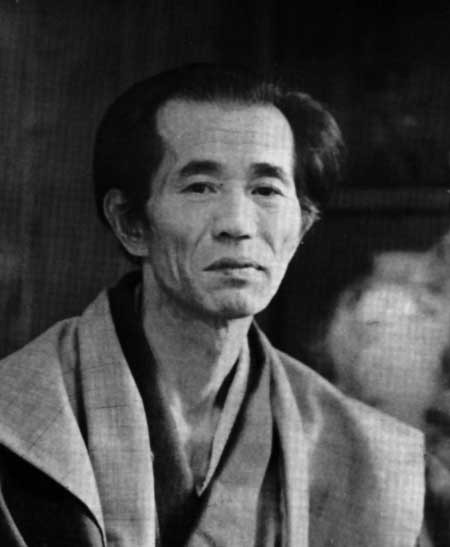
Shigeru Egami, 1912-81

How Poetry Comes to Me

It comes blundering over the
Boulders at night, it stays
Frightened outside the
Range of my campfire
I go to meet it at the
Edge of the light

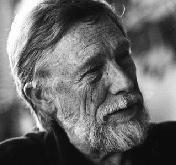
Gary Snyder

Relaxed habit

Charles reminded me of a Dr Chi story yesterday. Dr Chi and John Kells were together and Dr Chi asked John how much practice he managed each day. "Eight hours", was John's reply. "Eight hours!", said Dr Chi, pausing just long enough for John to feel the pride welling up inside himself, before adding, "Not enough."

John recommended developing strategies for bringing the principles, at least, into other areas of your life. One of these was, "Develop a relaxed habit". He suggested taking a couple of habitual, simple tasks that you repeat many times a day and trying to do them consciously in a more relaxed and sensitive manner. Two he suggested as examples were opening a door, and sitting down and standing back up. Try to use a minimal grip on the door handle, and turn the waist to pull or push it rather than yank at it with the arm. Descend onto the seat of a chair by bending at the hips, using the legs to take the strain. Try to impact the chair with zero velocity. On rising, tilt from the hips and push gently with the legs, then the action will be effortless and will generate a little energy which will rise up the spine and through the head, giving your spirit a slight lift. When someone hands you something and you take it from their hand, try not to snatch. Grip, allow the others grip to release, and then take. When facing another person let your heart open and embrace them. When standing try never to lock the knees, and always have the weight mainly on one slightly bent leg. When looking at something (especially the computer screen) try to soften and relax the eyes (imagining they are at the back of the head helps). The possibilities are endless. And, especially in your dealings with others, you can similarly develop a listening habit (Mac used to imagine he was a sponge soaking up all around him), a spirited habit, a compassionate habit, a generous habit, a cheerful habit, etc. Let your Tai Chi subversively eat its way into everything you do. It's the only reasonable way of practising more than eight hours a day.

02 August 2005

Judgements and opinions . . . are doubtful murmurs in mental mud.
Robert Smithson, 1969

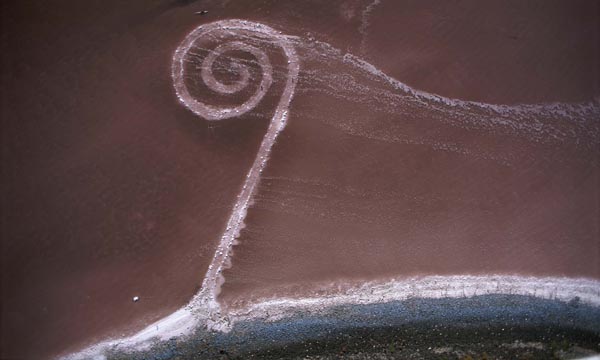
Apparently, recent droughts have exposed Smithson's Spiral Jetty on the Great Salt Lake, which has been submerged almost since its construction in 1970.

Under shallow pinkish water is a network of mud cracks supporting the jig-saw puzzle that composes the salt flats. As I looked at the site, it reverberated out to the horizons only to suggest an immobile cyclone while flickering light made the entire landscape appear to quake. A dormant earthquake spread into the fluttering stillness, in a spinning sensation without movement. This site was a rotary that enclosed itself in an immense roundness. From that gyrating space emerged the possibility of the Spiral Jetty. No ideas, no concepts, no systems, no structures, no abstractions could hold themselves together in the actuality of that evidence. Robert Smithson

Maximus of Gloucester

Only my written word

I’ve sacrificed every thing, including sex and woman
– or lost them – to this attempt to acquire complete
concentration. (The con-
ventual.) “robe and bread”
not worry or have to worry about
either

Half Moon beach (“the arm of her”)
my balls rich as Buddha’s
sitting in her like the Padma
– and Gloucester, foreshortened
in front of me. It is not I,
even if the life appeared
biographical. The only interesting thing
is if one can be
an image
of man, “The nobleness, and the arete.”

(Later: myself (like my father, in the picture) a shadow
on the rock.


Charles Olson, 5/11/65

Transformation

Each of the postures of Tai Chi constitutes a transformational procedure for dealing with oncoming energy. You transform from a target into a receptacle for the energy, turning it, uprooting it, downrooting it, and finishing it off with a deadly blow. When yielding you have a choice whether to yield with the inside or outside of your left or right arm, inside or outside their left or right attacking arm, by turning to the left or right. This then makes 32 possibilities, and doesn’t even include changes in direction. So, for example, in Ward Off Left posture you yield with the outside of your right arm to the outside of their right arm by turning to the right. In Ward Off Right you yield with the outside of your left arm to the inside of their right arm by turning to the left. In Roll Back you use the outside your left arm on the outside of their left, turning to the left (having first entered with a small right turn - such a small turn of entering should precede each neutralizing turn within the Form). Press is a follow up posture but can also be thought of as an advancing yielding turn to the right with the outside of your right arm to the inside of their left. Push posture involves two yields, the outside of your left to the inside of their right, turning to the left, followed by the outside of your right to the inside of their left, turning to the right. In Lifting Hands you yield with the insides of your arms (palms) to their left arm, using the inside of your left to the inside of their left with a left turn, followed by the inside of your right to the outside of their left with a left turn. And so forth. The possibilities are seemingly endless.

Technical considerations such as these would bore my teacher rigid and would certainly have infuriated Dr Chi who would not tolerate any talk of applications. The real transformation happens before. It is difficult to know who transforms who. But what is for sure is that it happens in and with the heart. I guess the one with the biggest most generous heart is the winner. The students my teacher feels most connected to (and therefore the ones that continue to receive teaching energy from him in absentia) are those with the loving hearts: Pip Pennington, Hugo Vanneck, Tony Visconti, Roberto Fraquelli, David Tremayne, to name the obvious ones. These are special people and anyone with a heart will feel it and will be transformed by their company (just thinking about them does it for me).

I remember a student of John’s going across to Vancouver for a holiday. He of course decided to drop in on Dr Chi to see if he could cadge any instruction. He knocked on the door and Dr Chi opened it. “Hello, my name is Kevin, I’m a student of John Kells. I wonder if you would take a look at my Tai Chi”. Dr Chi said, “Just a moment”, and rushed off. He came back a minute or so later with a small book. He thrust it into Kevin’s hands and said, “Read this, it’s far better than Tai Chi”, and closed the door. Kevin looked down at the book. It was the New Testament. Later that evening Kevin phoned John and told him the story. Kevin was resigned to not being able to do any Tai Chi with the great man, but John said, “Go back and make yourself useful”. So Kevin returned the next day, this time explaining that he was also a tradesman and did Dr Chi have any jobs around the house that needed attending to. Dr Chi was delighted, invited Kevin in and showed him all the broken items that needed fixing. Kevin got to work immediately. Whilst he was working he and Dr Chi chatted, and eventually Dr Chi offered to take a look at his Tai Chi and even eventually pushed hands with him. When Kevin returned to London he came along to Tai Chi classes, took one look at how a posture was being taught, peevishly announced that this was not the way Dr Chi did it and left the building never to be seen again.

There are a few morals to this story.

01 August 2005

Somehow face up to fear and move into the world of your own heart.
John Kells

The Runaway

There are sparkles of rain on the bright
Hair over your forehead;
Your eyes are wet and your lips
Wet and cold, your cheek rigid with cold.
Why have you stayed
Away so long, why have you only
Come to me late at night
After walking for hours in wind and rain?
Take off your dress and stockings;
Sit in the deep chair before the fire.
I will warm your feet in my hands;
I will warm your breasts and thighs with kisses.
I wish I could build a fire
In you that would never go out.
I wish I could be sure that deep in you
Was a magnet to draw you always home.

Kenneth Rexroth

Transformation

Is the name of the game. And connexion. To transform into a better connector.

The Chinese talk about transformations: transforming work into ch'i, ch'i into spirit, etc. However, my teacher's interest is in the between-energy. The spark of connexion between entities. One can call it spirit but it is really more than spirit because it goes with an opening and working of the heart. Love? Spending time with my teacher's dying cat (she is 18 and has cancer and only a week or so to live) my heart naturally opens and feels pain. Part of me shrinks from this and thinks, "We should take her to the vet and end her misery", and yet when I leave her company I feel less than I did whilst I was with her: her company and my consequent connexion with her and her suffering (they are inseparable) makes me more human and more alive. She is very frail and finds breathing difficult yet she connects better now than she ever did partly because she doesn't have the energy to resist and partly because she naturally opens my heart and makes me better able to connect with her. I am the deficient one, not she. She transforms me into a better person, at least whilst I'm with her*. This is the reality that we students of heartwork need to open to and become aware of. One can do all the strength training, ch'i kung, Tai Chi and spiritual exercises in the world and still be unable to connect and transform.

On a practical level it is important to exercise and get some mobility into the three hearts - the one in the chest and the ones in the belly (sacrum) and head (mid to back brain). We do this using gentle figure of eight movements. It is then necessary to interact energetically with your colleagues. Pushing-hands wont do it, the energy isn't good enough, it doesn't vibrate. The exchanges need to be far more charged (more like real attacks) with no holding back, only then will the workings of the heart be visibly effective. Real interactions are going to produce real emotions. You will feel more alive and will realise that the reason for this is that your heart has worked, opened and connected. This sort of connexion is with everything. Your energy will fill the room and even inanimate objects will come alive. You will waken to the fact that everything touches and affects - transforms. There can only be objectivity when we actively force the world to be a collection of unconnected objects - when we withdraw our hearts. When we do this the thinking mind often comes to the fore. When the heart is present there is no need or room for thought. When the heart withdraws, for whatever reason, we are disheartened and lose sight of the reality of everything touches. These are the times when we need the courage and belief to actively search out hearty connexions and not suffer in silence. Life connects. Death disconnects. Whilst there is still life, no matter how tenuous, the energy of connexion is present. In primitive societies disheartenment would be very rare because as well as there being the constant society of friends and family to tease the withdrawing heart out again, these peoples tend to have world views which teach the divinity and connexion of all things*. This is what we need: heartwork as the foundation and fabric of our society. A new mythopoeia. A permanent revolution.


* Because connexion is all she has left the thing she loves now more than anything is company, more specifically she likes you to sit with your head the same level as hers, looking into her eyes with your hands on her body. The energy conversations that go on between us are remarkable and very affecting. Makes me realise how limited language is as a tool for communication, it gets things across but it also keeps a distance and gives us an excuse to be insensitive to other more intimate aspects of communication.

* I remember Archbishop Trevor Huddleston saying that when he moved from missionary work in Tanzania to take over the parish of Stepney in east London he was struck by how materially rich the working-class Londoners were compared to the Tanzanian tribes people and yet how deprived they were of love and connexion.

Feline softness


Posting Assi's painting yesterday with the two young men struggling to learn to yield in their ridiculously long stances, both staring desperately at the cat for inspiration, I remembered something my teacher once told me: a sure way to learn softness-listening-yielding is to own and regularly handle an affectionate cat. Watching him with his cats is a lesson in itself. Like he says, "These animals are so pure, the only thing they know is connexion. I can only strive to be as good as they."