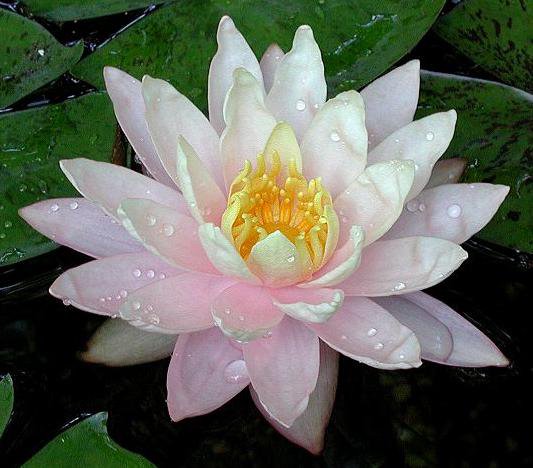
The more advanced example shows a
                         balanced
                           zigzag
                               relaxation
                       an epic tempo
                               when the
                           diagonal
                           is present
                    further back things lighten progressively
08 November 2005
07 November 2005
06 November 2005
Yielding
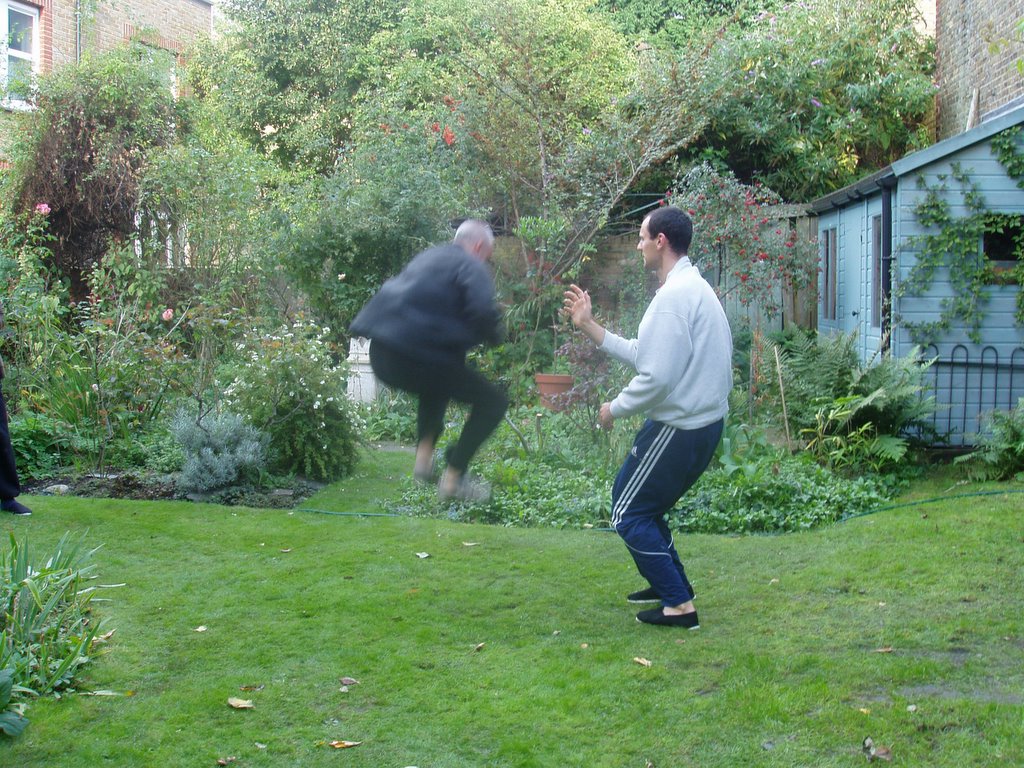
John often talks of connecting to another by laying yourself alongside them, and today whilst working with him I suddenly realised that this is exactly how it is. I had a very simple choice: whether to remain being me or to relax my boundaries and allow myself to absorb him sufficiently to hear and feel and eventually become what he is. And we were aslant, slightly, to each other, and even when we are head on we have both done enough entering and yielding by now to insinuate and nestle accommodatingly rather than clash and press our differences. Listening was a matter of losing my bearings and allowing the other to become my point of reference. The more I was able to do this the more I became aware of the subtle beauties and intricacies of his energy, but also, surprisingly, the more I became aware of my own energy and how it was changing and waking to the implications of the process of this listening which was in fact a joining. Entering one has a choice whether to frantically search for familiar landmarks against which to judge the unknown (the most familiar being self), or to enter upon entering a realm within one’s own energetic reality which no longer needs landmarks because nothing is known or unknown - there is enough seepage through the living surfaces for the web of connectedness to feed and inform all within it. Persistent entering of this nature wears away the skin and leaves it raw and tingling, constantly searching for new (or old) surfaces to lay against. And such surfaces are all around though some are more fulfilling than others, in the sense of taking you breathlessly beyond yourself. When both parties lay alongside each other in this listening and becoming manner then there is the chance for a developing relationship: some magic happens and the resulting sparks coalesce and settle into the energetic space of your togetherness. This can and generally does happen unawares, especially for those not particularly interested in energy. However, for those of us who work with it and within it, laying alongside eventually brings you to the realisation that there is nothing else quite so worthwhile so why bother with anything else. This is the choiceless state of grace and active yielding that we all yearn for on some level. The secret is to get to that level so that you can leave behind all that gets in the way.
05 November 2005
04 November 2005

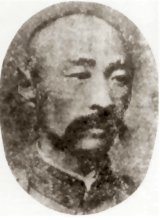
Sun Lu-Tang (1861-1933), of course. Famous for his Ba Gua and Hsing I (less so for his Tai Chi). There is something magical about this man, and the legends that have sprung up around him, from his meeting with the Taoist on the mountain, to his shrinking testicles, to the manner of his death.
Thinking
Thinking is the vestibule of the mind.
The main purpose of thinking for the average person is to grasp at the world outside his body, and by a process of tightening make this palatable to his inner condition.
This is the way he comes to terms with the rawness and suddenness of reality.
The main purpose of thinking for the average person is to grasp at the world outside his body, and by a process of tightening make this palatable to his inner condition.
This is the way he comes to terms with the rawness and suddenness of reality.
John Kells
The Tremble of Life
The student of Heartwork, instead of interposing things between himself and this rawness and suddenness of reality, instead relishes and learns to use that rawness as a guide. The good student knows deep down that no matter how unbearable, that trembling vulnerability he feels in the face of reality is the tremble of life, and is what gives him power and strength. When my teacher used to say to students, especially the ones full of assurance, swagger and self-confidence, to search each day for weakness and vulnerability, it wasn’t in order to eradicate that weakness through the work, but to establish it as the guide and beacon for one’s developing humanity.
“Six foot six he stood on the ground / weighed two hundred and thirty five pounds / but I saw this giant of a man brought down / by a thing called love.” In the face of such feelings the average person retreats to recover or wallows self-pityingly, but if they had the courage to refuse either of these options and instead drove forwards with their aching breaking heart they’d realize that whilst in this condition they have immense power because they are so much better able to connect, and through that connecting to transform and change the world (this is power). Always be eternally grateful to anything that gives your ego a good bashing, and try to familiarize yourself with the tenderness and tearfulness that accompanies it, and work to establish this condition as your primary one.
Jesus is often depicted with a hand raised, a compassionate face, and a chest ripped open to reveal the sacred heart.
John always used to say that how you feel is simply an opinion of the way things are and you should never let it interfere with your relationship with either the work or with anything else. To treat things badly because you feel bad is the ultimate in meanness. Being confidently full of yourself when you feel good is equally repulsive (how many Tai Chi masters fall into this trap?). A few years ago, after watching my gleaming perfect Form my teacher said to me, “You must bleed more.”
“Six foot six he stood on the ground / weighed two hundred and thirty five pounds / but I saw this giant of a man brought down / by a thing called love.” In the face of such feelings the average person retreats to recover or wallows self-pityingly, but if they had the courage to refuse either of these options and instead drove forwards with their aching breaking heart they’d realize that whilst in this condition they have immense power because they are so much better able to connect, and through that connecting to transform and change the world (this is power). Always be eternally grateful to anything that gives your ego a good bashing, and try to familiarize yourself with the tenderness and tearfulness that accompanies it, and work to establish this condition as your primary one.
Jesus is often depicted with a hand raised, a compassionate face, and a chest ripped open to reveal the sacred heart.
John always used to say that how you feel is simply an opinion of the way things are and you should never let it interfere with your relationship with either the work or with anything else. To treat things badly because you feel bad is the ultimate in meanness. Being confidently full of yourself when you feel good is equally repulsive (how many Tai Chi masters fall into this trap?). A few years ago, after watching my gleaming perfect Form my teacher said to me, “You must bleed more.”
03 November 2005

Rest
Body builders know for a fact than when they train (lift their excessive and awesome weights) they are destroying or breaking down muscle, and it is during their extensive rest periods between training sessions that the muscle is built up larger and stronger than it was before. This is probably a good model of what happens during any work regime. Working you expend energy, resting you gather it. This rhythm is the heart beat of the work. It never stops. Hit the right rhythm and your labours will be worthwhile. Work too hard or too much and you’ll become blinkered and exhausted and eventually burn out, rest too much and you’ll become sluggish and depressed. The important point here though is that the quality of your rest is as important as the quality of your work, especially with something like Tai Chi for which relaxation should be such a vital necessity. Students who don’t rest properly tend either to be incapable of relaxing, or their relaxation is just sleepy and lifeless: no real energy. Getting through your day with tension rather than energy is very dangerous. The tension will draw on reserves of vitality that should really be saved for much later and you’ll age more quickly and live a shorter effective life than you should. What proportion of the population start the day with coffee and end it with alcohol? This habit may get you through the day, but it’s unlikely that any of the activities of the day will help in developing and refining the soft abiding between-energy that should consume and envelop everything the good student does. Tension, by definition, tightens, constricts and separates. Heart opens, expands and joins. The two cannot live together.

02 November 2005
The Work
writing poems
(keeping rabbits)
each day the shite
to be cleared
fresh straw to be laid
Tom Pickard
(keeping rabbits)
each day the shite
to be cleared
fresh straw to be laid
Tom Pickard
Yielding
Yielding means giving way, not resisting. In a martial sense this is reasonably clear to see: energy comes towards you and rather than try to knock it off course or retreat from it, you turn the waist, allow the energy through, turn it and return it. The person who excelled at this was Dr Chi: he could yield in any situation from any stance: he embodied yielding. This was because his Tai Chi studies had gradually taken him deeper and deeper into yielding and had led him to realize that yielding was in essence just connecting. Connecting, connexion, connectedness are the basis of life and existence. It is the one thing that happens and is happening all the time, and, as John would say, out of time. So yielding, if you become consumed by it and are correctly motivated (you have a driving need to be better connected rather than a desire to overcome others), will lead you to the source of it all and to the one thing worth studying: connectedness. When this becomes your consuming passion and interest then you begin to develop a yielding attitude to everything: you softly enter all things equally. It doesn’t take long to realize that to connect to other entities you must remove all of your own hardnesses from the situation, and preferably from yourself: eradicate. These hardnesses include your opinions, your ego, your conditioning, your thoughts, your desires, your fears, your education, in fact pretty much every aspect of you, leaving just energy, essence, spirit and soul; even the body is eventually rejected, which, if you like is the beauty and meaning of death. Your hardness encloses and constricts these more fundamental parts of you. Once you begin to let that hardness go then energy and essence will come more to the fore in your being and in your life, and you will begin to operate (cooperate) on their level. In a sense this means leaving for good the world of the average person and entering a new world which the average person touches every now and then, but really has little interest in or regard for. The purpose of this blog is to elucidate this process.
This is a response to Ray's comment below.
This is a response to Ray's comment below.
01 November 2005
Perfection
The Truth of Perfection is the Perfection of Truth.
It stands alone, forced upward to prominence by the movement of the tectonic plates of reality as they ride the molten magma of change.
The landscape has no features, just this prominence.
This prominence is the expression of the landscape.
Nothing can adhere to it, for it is not there to be used.
It slips all grasps, yet it is the one thing to practice.
Why practice anything else?
John Kells
It stands alone, forced upward to prominence by the movement of the tectonic plates of reality as they ride the molten magma of change.
The landscape has no features, just this prominence.
This prominence is the expression of the landscape.
Nothing can adhere to it, for it is not there to be used.
It slips all grasps, yet it is the one thing to practice.
Why practice anything else?
John Kells
Celtic New Year
This article is taken from another site. Click the title to this post to be directed there.
November 1 is the Celtic feast of Samhain. Samhain, Gaelic for "summer's end," was the most important of the ancient Celtic feasts.
The Celts honored the intertwining forces of existence: darkness and light, night and day, cold and heat, death and life. Celtic knotwork represents this intertwining. The Celts observed time as proceeding from darkness to light. The Celtic day began at dusk, the beginning of the dark and cold night, and ended the following dusk, the end of a day of light and warmth. The Celtic year began with An Geamhradh, the dark Celtic winter, and ended with Am Foghar, the Celtic harvest. Samhain marks the beginning of both An Geamhradh and the new Celtic year.
Samhain and the new Celtic year actually begin at dusk on October 31, the beginning of the Celtic day. Oidhche Shamhna, the Eve of Samhain, was the most important part of Samhain. Villagers gathered the best of the autumn harvest and slaughtered cattle for the feast. The focus of each village's festivities was a great bonfire. Villagers cast the bones of the slaughtered cattle upon the flames. (Our word bonfire comes from these "bone fires.") With the great bonfire roaring, the villagers extinguished all other fires. Each family then solemnly lit their hearth from the one great common flame, bonding all families of the village together.
The eve of the Celtic year was a very holy time. The Celts believed that Oidhche Shamhna was a gap in time. Our world and the Otherworld came together on the night between the old and new years. The dead could return to the places where they had lived. Many rituals of Oidhche Shamhna provided hospitality for dead ancestors. Celts put out food and drink for the dead with great ceremony. They left their windows, doors, and gates unlocked to give the dead free passage into their homes. Swarms of spirits poured into our world on November Eve. Not all of these spirits were friendly, so Celts carved the images of spirit-guardians onto turnips. They set these jack o'lanterns before their doors keep out unwelcome visitors from the Otherworld.
There was also a much lighter side to the Celtic New Year rituals. Young people would put on strange disguises and roam about the countryside, pretending to be the returning dead or spirits from the Otherworld. Celts thought the break in reality on November Eve not only provided a link between the worlds, but also dissolved the structure of society for the night. Boys and girls would put on each other's clothes, and would generally flout convention by boisterous behavior and by playing tricks on their elders and betters.
Divination of the events of the coming year was another prominent feature of Samhain. Celts used hazelnuts, symbols of wisdom, to foretell the future. Bobbing for apples, another traditional Samhain pastime, was a reference to the Celtic Emhain Abhlach, "Paradise of Apples," where the dead, having eaten of the sacred fruit, enjoyed a blissful immortality.
Ancient Celtic religion cast the year as a contest between the gods of winter and summer for the favor of the goddess of the earth. The god of summer claimed victory at Latha Buidhe Bealltainn, May Day, but at Samhain the god of winter, who was also lord of the dead, was victorious. Celts often depicted the god of winter with antlers which he shed each autumn like a stag. In parts of western Brittany the coming of winter is still heralded by the baking of kornigou. Kornigou are little cakes in the shape of antlers to commemorate the god of winter shedding his "cuckold" horns as he returns to his kingdom in the Otherworld.
Many ancient Celtic customs proved compatible with the new Christian religion. Christianity embraced the Celtic notions of family, community, the bond among all people, and respect for the dead. The Western Church gave Samhain a Christian blessing in 837 AD when November 1 was designated the Feast of All Saints or Hallow Tide. Oidhche Shamhna became Hallow E'en.
November 1 is the Celtic feast of Samhain. Samhain, Gaelic for "summer's end," was the most important of the ancient Celtic feasts.
The Celts honored the intertwining forces of existence: darkness and light, night and day, cold and heat, death and life. Celtic knotwork represents this intertwining. The Celts observed time as proceeding from darkness to light. The Celtic day began at dusk, the beginning of the dark and cold night, and ended the following dusk, the end of a day of light and warmth. The Celtic year began with An Geamhradh, the dark Celtic winter, and ended with Am Foghar, the Celtic harvest. Samhain marks the beginning of both An Geamhradh and the new Celtic year.
Samhain and the new Celtic year actually begin at dusk on October 31, the beginning of the Celtic day. Oidhche Shamhna, the Eve of Samhain, was the most important part of Samhain. Villagers gathered the best of the autumn harvest and slaughtered cattle for the feast. The focus of each village's festivities was a great bonfire. Villagers cast the bones of the slaughtered cattle upon the flames. (Our word bonfire comes from these "bone fires.") With the great bonfire roaring, the villagers extinguished all other fires. Each family then solemnly lit their hearth from the one great common flame, bonding all families of the village together.
The eve of the Celtic year was a very holy time. The Celts believed that Oidhche Shamhna was a gap in time. Our world and the Otherworld came together on the night between the old and new years. The dead could return to the places where they had lived. Many rituals of Oidhche Shamhna provided hospitality for dead ancestors. Celts put out food and drink for the dead with great ceremony. They left their windows, doors, and gates unlocked to give the dead free passage into their homes. Swarms of spirits poured into our world on November Eve. Not all of these spirits were friendly, so Celts carved the images of spirit-guardians onto turnips. They set these jack o'lanterns before their doors keep out unwelcome visitors from the Otherworld.
There was also a much lighter side to the Celtic New Year rituals. Young people would put on strange disguises and roam about the countryside, pretending to be the returning dead or spirits from the Otherworld. Celts thought the break in reality on November Eve not only provided a link between the worlds, but also dissolved the structure of society for the night. Boys and girls would put on each other's clothes, and would generally flout convention by boisterous behavior and by playing tricks on their elders and betters.
Divination of the events of the coming year was another prominent feature of Samhain. Celts used hazelnuts, symbols of wisdom, to foretell the future. Bobbing for apples, another traditional Samhain pastime, was a reference to the Celtic Emhain Abhlach, "Paradise of Apples," where the dead, having eaten of the sacred fruit, enjoyed a blissful immortality.
Ancient Celtic religion cast the year as a contest between the gods of winter and summer for the favor of the goddess of the earth. The god of summer claimed victory at Latha Buidhe Bealltainn, May Day, but at Samhain the god of winter, who was also lord of the dead, was victorious. Celts often depicted the god of winter with antlers which he shed each autumn like a stag. In parts of western Brittany the coming of winter is still heralded by the baking of kornigou. Kornigou are little cakes in the shape of antlers to commemorate the god of winter shedding his "cuckold" horns as he returns to his kingdom in the Otherworld.
Many ancient Celtic customs proved compatible with the new Christian religion. Christianity embraced the Celtic notions of family, community, the bond among all people, and respect for the dead. The Western Church gave Samhain a Christian blessing in 837 AD when November 1 was designated the Feast of All Saints or Hallow Tide. Oidhche Shamhna became Hallow E'en.