When you properly relax, the two halves of the body feel as though they are falling away from each other, loosening their grip and finding their own space & place. Fibres unknit. Tension is a tight congested holding together or holding on – things fearfully cling to whatever is closest. It is only when things relax away from each other that a proper and natural interaction can develop. If things are naturally connected, which all things are, then the relaxed space between is quite alive with the energy of connexion, allowing the spontaneous and continuous creation of the Third Heart – the governing engine of connexion. The nature of an interaction will then depend upon this Third Heart which is allowed to develop and flourish in the nourishing space between, rather than upon the will of either of the interacting entities. This principle of relaxation – the opening up of the space between and the filling of that space with the energy of connexion – should pervade your being. The two halves of the body relax away from each other. Muscle fibres relax away from each other, as do the cells within those fibres and the molecules within those cells. You will then begin to develop a natural energetic presence, and a natural wisdom that stems from your whole physical and energetic being, not from the thinking mind. This is quite apart from ch'i or physical strength or intellectual prowess which require active cultivation – the use of will or mind – and naturally decline with age. If you follow the route of relaxation and connexion then as your faculties inevitably decline you become more and more connected and more and more imbued with, and composed of, the energy of connexion because that is all you have left. I'm thinking in particular of my teacher's father. I visited him just before Christmas to help him with his computer. As I was sitting at the screen he hovered behind me watching and placed his hand on my shoulder with the lightest of touches. Instantly my whole body was charged with his energy which was so fine and alive and pure and unlike anything I had felt before. A frail old man, bent almost double and breathing with difficulty, yet easily the most energetic and remarkable person I think I have met. What is also strange is that when he touched me I suddenly saw the world as though through his eyes – his touch made me him for a moment – and it was a beautiful place – far more so than the world I usually inhabit. His world was the natural and real one – the one of connexion. My world was my own – curled up into itself with brooding dullness. What is interesting is that he has reached such an advanced level by living a life that has constantly and willingly (and happily) put others first.
16 March 2006
15 March 2006

Becoming
Discussing unconditionality with JK yesterday. That what is important is not who you connect with or what you believe in or who you love, but to be a connector, a believer and a lover – to be in the continuous process of connecting, believing and loving. Practising. Regardless. This is how Dr Chi was able to yield to JK before he got out of bed in the morning: yielding mind.
“In any real interchange it is the Third Heart that counts. Fixation on either (or both) of the other two negates potential. It is the same with belief. To be a believer is to be a positive being – a believer is someone who is becoming. Becoming leaves no imprint. There is no mind to deliberate or be backwards. Even a concept of forwards, although useful to combat backwards, is forgotten. Becoming swallows what is commonly known as destiny. Real connexions you make are on your becoming route, and each Third Heart a cog that impels or pulls you along the spiral natural process. This kind of connexion requires this kind of believing and this kind of becoming. Light and embracing, but embracing as a giving from the heart rather than capturing. No matter what any other person might be doing, your becoming brings the Third Heart to its own life, and your positivity is sufficient for its nutrition. And the inspiration of the Third Heart is nutrition for your becoming. The activity is so rich that like or dislike do not come into it, and all one's functions are warmed – irradiated – by its glow.” John Kells
“In any real interchange it is the Third Heart that counts. Fixation on either (or both) of the other two negates potential. It is the same with belief. To be a believer is to be a positive being – a believer is someone who is becoming. Becoming leaves no imprint. There is no mind to deliberate or be backwards. Even a concept of forwards, although useful to combat backwards, is forgotten. Becoming swallows what is commonly known as destiny. Real connexions you make are on your becoming route, and each Third Heart a cog that impels or pulls you along the spiral natural process. This kind of connexion requires this kind of believing and this kind of becoming. Light and embracing, but embracing as a giving from the heart rather than capturing. No matter what any other person might be doing, your becoming brings the Third Heart to its own life, and your positivity is sufficient for its nutrition. And the inspiration of the Third Heart is nutrition for your becoming. The activity is so rich that like or dislike do not come into it, and all one's functions are warmed – irradiated – by its glow.” John Kells
Dance of Vitality
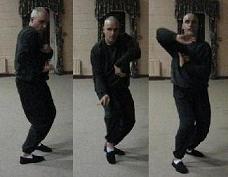
Mark has posted a downloadable video clip of the Dance of Vitality – the pinnacle of Yang Style Tai Chi. JK learnt it from Chu Gin Soon.
14 March 2006
12 March 2006
Destiny
Form and content are, in a way, irrelevant, because what's important is neither what you say nor how you say it but who you are.
11 March 2006
daode jing
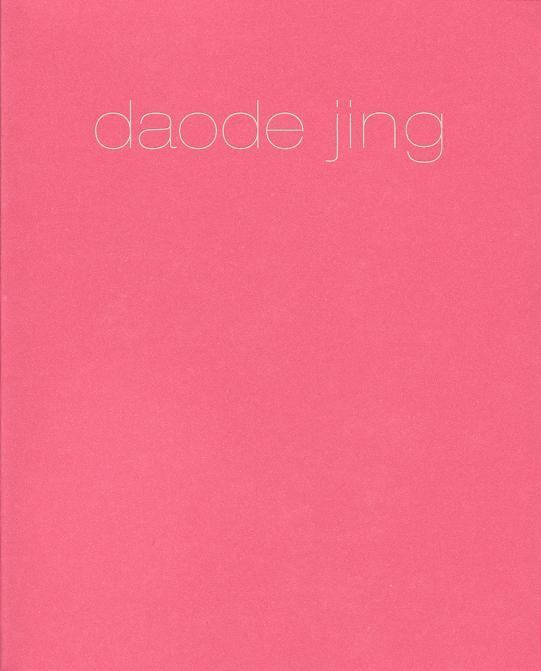
Thomas Meyer has a new translation of the daode jing (Tao Te Ching) out.
It is stunning, both as translation & object.
This website is a useful resource.the best direction is barely felt
the next best is like a friend
fear follows after that
dismiss the last as useless
a lack of trust makes
things untrustworthy
quiet and in few words
finish what was begun
so that people say
it simply happened on its own
Daigu Ryokan (1758-1831)
Found this on the web:

Ryokan's hand.
Like Han-shan in China, Ryokan is loved as much for his antics as for his profound poetry.
Ryokan became a priest at age 18 and took to a life of wandering. He eventually met his teacher, Kokusen Roshi, and settled down to study Zen, ultimately becoming his most esteemed student. When Kokusen Roshi died, Ryokan inherited his temple. But the duties and regularity of being temple master didn't suit Ryokan, and he resumed his itinerant life.
He next settled in a small hut he called Gogo-an on Mt. Kugami, where he lived by begging.
Ryokan's love of children and animals are legendary. He often played games with the local children, attested to in his own poetry.
His reputation for gentleness carried sometimes to comical extremes. One tale is told that, one day when Ryokan returned to his hut he discovered a robber who had broken in and was in the process of stealing the impoverished monk's few possessions. In the thief's haste to leave, he left behind a cushion. Ryokan grabbed the cushion and ran after the thief to give it to him. This event prompted Ryokan to compose one of his best known poems:
As Ryokan was dying, Teishin came to him and held him at his moment of death. It was Teishin who collected and published Ryokan's poetry after his death.
Ryokan became a priest at age 18 and took to a life of wandering. He eventually met his teacher, Kokusen Roshi, and settled down to study Zen, ultimately becoming his most esteemed student. When Kokusen Roshi died, Ryokan inherited his temple. But the duties and regularity of being temple master didn't suit Ryokan, and he resumed his itinerant life.
He next settled in a small hut he called Gogo-an on Mt. Kugami, where he lived by begging.
Ryokan's love of children and animals are legendary. He often played games with the local children, attested to in his own poetry.
His reputation for gentleness carried sometimes to comical extremes. One tale is told that, one day when Ryokan returned to his hut he discovered a robber who had broken in and was in the process of stealing the impoverished monk's few possessions. In the thief's haste to leave, he left behind a cushion. Ryokan grabbed the cushion and ran after the thief to give it to him. This event prompted Ryokan to compose one of his best known poems:
When Ryokan was 70 and nearing the end of his life, he met a young nun and poet named Teishin. Though Teishin was only 28, they fell in love. They exchanged several beautiful love poems.The thief left it behind:
the moon
at my window.
As Ryokan was dying, Teishin came to him and held him at his moment of death. It was Teishin who collected and published Ryokan's poetry after his death.
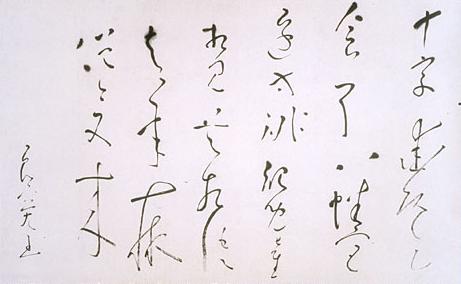
Ryokan's hand.
10 March 2006

Gerda Geddes (1918-2006)
Mark texted me last Friday that GG had died.
As far as I know she was the first Westerner to teach Tai Chi in UK.
Detail
The figure of eight can be thought of as either a circle that has been twisted in which case tightening the curvature to pull towards the centre of the circle (the node or nexus of the eight) requires an increase in energy or intensity, or it can be thought of as a central seed from which expand in turn two embracing loops, in which case a surge or pump of swallowing (open-expand-embrace-close) energy is required each time a loop is generated. In the first case a full-size image already exists of the eight, and the body or mind just traces it out. In the second case the eight exists in tiny embryo form and is “grown” anew each time it is expressed. Both are useful. If the intensity is increased when tracing or generating figures of eight then the eights want to speed up and reduce in size (tighten), but also we find that if the body remains relaxed then those parts of the eight that are generally slack (those parts the body finds easy) tend to flesh out with intricate details. These details are in fact tiny and very fast figures of eight embedded within the path of the main figure of eight. A figure of eight requires two waist turns (left followed by right or vice versa) so an intense figure of eight with much detail will require many waist turns - a vibrating waist.
09 March 2006
Containing duality
The wonderful thing about the figure of eight is its contained dual nature – it is a continuous closed figure containing two loops. We find that there seems to be a law of proliferation in place that naturally generates smaller figures of eight within each of the two loops of a larger eight. These smaller eights can be in any plane. So if you make a figure of eight with the hips or waist then the two arms naturally want to create their own figures of eight which can be thought of as being contained or generated by the eight in the waist. What this implies is that figures of eight always come in pairs – if there's one there must be another somewhere and there must then be a larger one that contains those two, and so on. It is important to have a feeling for this. So when figure of eighting with the waist try to feel the similar eight in the imaginary opponent's waist and try to feel (be aware of) the larger eight containing the two of you (the relationship) (feel this expressing in various planes). As well as you doing figures of eight there is a larger one somewhere doing you. Also be aware that because all this is natural there should quite soon come a point in your work when relaxation and heart (compassion) replace concentrated effort.
08 March 2006
From ECHO
misunderstood as a measure of distance. ItMichael Palmer, from Codes Appearing: Poems 1979-88
takes no time in that sense, repeats nothing,
figures the shape of the flames. Gesticulate.
a failure of translation. In sleep the language
he spoke was one he didn't know. Waking it
sounded the same. Waiting there it seemed a
succession of names, a level field of things in
constant motion, exchanging identities.
neither followed nor following. Two are there as
she counts to one, to one and one then three five
eight defining the spiral, to double sevens to
begin, to instauredness. Left arm and right arm and
the figures like the fire. There must be a
different metric, a gesture and that's all, this
this and so on, concomitance, like writing but
it's not writing, the pieces actually are.
Respect
Try to find and stay with the gentle thread of connexion that runs through your day.AwakenedJospeh Massey
by the ticking
not the alarm.
Once you've caught it often enough you'll never shake it off.
07 March 2006

Borrowing
How do you progress? A big question. Is all Dr Chi could say was “Somehow.” My teacher's advice to me was “Be different.” I remember once him yelling at me to get it right. “But how?” I implored. “That's easy,” he said, “just stop doing it wrong.” High standards indeed and something he is well capable of, always having had terrific spirit. Spirit empowers and makes you altogether capable. But if you're needing to learn something that you don't have within in order to progress then rousing spirit isn't really going to help – it's just going to make you more completely you : Self-yeast of spirit a dull dough sours. This is where the principles of Tai Chi come in. Remember the first lesson where your teacher explains yielding? “You can never guarantee to be stronger than your opponent, but you can always chose to be weaker.” Listening. Putting the other first. Borrowing. To be different you need inspiration from somewhere – you need to borrow energy. Your teacher is constantly trying to lend you some in the vain hope that you may make a little progress. The trouble is that most students abuse the energy – they quickly learn how to channel that good energy into aspects of themselves rather than allowing it to be the instrument and stimulus for change it was intended to be. This really is abuse, and it's dishonest, and extremely ugly to boot. It's not real borrowing because nothing is given in return, apart from the class fees which don't count – they just get you in the door. What you should return is honour and reverence – you should make every effort to assimilate and become the borrowed energy – become more like your teacher. All teachers have experience of good students. You only need one in a class to make that class work. The student is so interested and willing to learn and change that they stimulate the teaching to express itself and as a teacher you quickly find stuff coming out that you didn't even know you knew. This is a natural process – a healthy energy circuit - and unfortunately it tends to happen more readily with beginners than with old hands who feel they've heard it all before and on some level cut off. (If your teacher tells you something again then it's because you haven't heard and accepted the first time, not because they are forgetful or have a limited repertoire.) The important thing here is that the honour and reverence you need to show the teaching and the teacher you must in fact show everything: your life can only effectively contain one message, and you can only effectively be, and be in the process of becoming, one thing. If you manage this then you can borrow energy from everything – nothing is beneath you – you are becoming all the time. This is openness and connectedness. The heart has a front and a back door – you can receive into one and give from the other and become a channel for heart and soul. This is what life should be – a powerful thrust rather than a series of static compartments. There is nothing more exhausting and ageing than having to constantly switch from one mode to another. If people can't take you the way you need to be then leave them behind.