31 July 2006

Absolute

sunlight after sex
first frost on the fells

a crystal apron dissolves
in a lap of certain light

water in a bedroom cup
cold clear

and the air sure

Tom Pickard

Avoidance

Avoidance is the enemy in life and the task at hand is to develop the honesty to search it out wherever it may be. It can take many forms, the most obvious being turning aside from problems that need facing, but really any self-projection is a form of avoidance – it avoids what's there by changing it into something more familiar and palatable – an extension of some aspect of self. It is a difficult problem because simply by being alive you are creating your own reality, or rather the reality that unfolds before you is as much due to you as it is anything else. Avoidance arises if you close off – if you block out what's trying to come in. Avoidance is generally a means to maintaining a status quo (balance) – a comfort zone – a cozy, well-known state. Not avoiding is all about allowing yourself to be taken away from the known and into the unknown. This requires you to have the training or wisdom, inside or at hand, to recognize and instantly go with selective forces of change – the ones that will lead you into what has been called a path with heart. This is always a matter for your energy rather than your thinking mind (always a long time after the event), which is why the first stage in Tai Chi and especially Heartwork is to develop a feeling for and a belief in energy as the prime positive ingredient in life, especially a life that is going somewhere. If we decide to try to live a life with less avoidance then we will be spending significant periods in states of not-knowing, not rationally anyway. The only way to adequately prepare for such times is to make sure your energy is up to the task, not just the energy that will enable you to get the task done but the more subtle energies that suss out the terrain before you physically or mentally venture into it – the energies of connexion. The best way to develop these energies is to practice connexion and practice responding to connexion, hence Heartwork.

30 July 2006

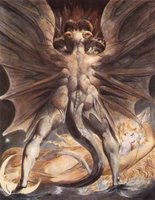
Blake's Great Red Dragon

A fact of energy

As you become more open not only do you feel and connect better to what's there, but you also begin to become aware of potential, of possibilities before they manifest, and your energy, free of the calculating mind, reaches into time and picks a path through. Part of you has already entered and even completed before you've started.

29 July 2006


Photo: Chris Laver

Openness

The serious student is someone who is prepared to work hard and who is willing to receive correction. To do one without the other is avoidance. Working hard is your own business. It takes years to develop the inner sobriety and ruthlessness to put yourself through the rigours and solitude of the work. If the work was well-defined then it wouldn't be so bad, but this is the last thing it is mainly because of its transformative power: it changes itself and it changes us in its doing so our relationship with it and with everything else through it are constantly changing. Here we are trying to get to grips with the earth beneath our feet and yet the ground is always shifting, so much so that the last thing we possess is balance. And what about the person before you – aren't they more awesome, more alive and more difficult to yield to each time confronted? All signs of progress. We are working on and with energy, especially the vital lively energy that gushes into spaces as they open up. Openness is our prime requisite and it's what makes things – especially life – difficult. But it also makes life more interesting, more alive. Openness has a lot to do with removing constraints, especially those that enable us to settle into categorization – into the known. Openness, or opening, is an ongoing process – we can always be more open – it never ends – so how fortunate we are to have found something we can uncomfortably devote the rest of our lives to without fear of boredom or security ever setting in.

28 July 2006

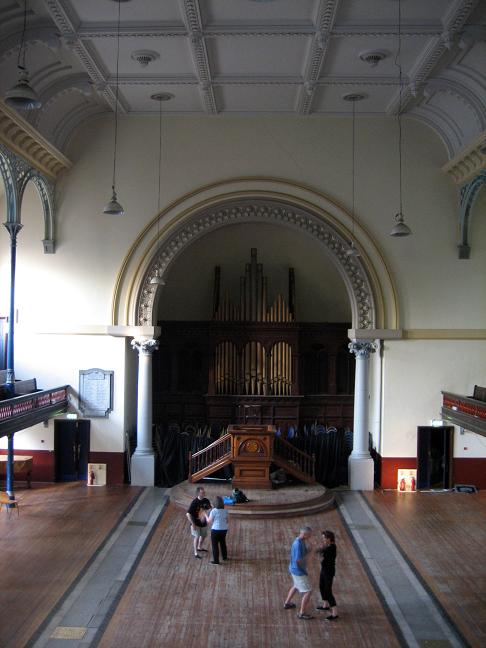
The Round Chapel, Hackney


Another well attended Tai Chi class.

Turning towards

Bending back to oneself represents a pragmatic orientation that objectifies the other and lends itself to the creation of a self contained individual.
Turning towards the other constitutes an ensembled individual in continuous relationship with others with boundaries between self and other not tightly drawn.

Martin Buber


I posted this last November but in the light of recent teaching thought I'd bring it here.


More Buber quotes:
taking care of the world by sustaining the web of connexion

I have given up the “religious” which is nothing but the exception, extraction, exaltation, ecstasy; or it has given me up. I possess nothing but the everyday out of which I am never taken

in order to be able to go out to the other you must have the starting place, you must have been, you must be, with yourself

meaning is to be found neither in one . . . nor in both together, but only in the dialogue itself, this “between” which they live together

the genuinely thinking man must live through the feminine, the genuinely thinking woman the masculine; each must find the counterpole to his/her own order to allow the unity of spiritual life to develop from both

27 July 2006

Connexion


The Round Chapel on the Lower Clapton Road, Hackney, London, E5: the most beautiful space I've ever taught in.

Photo: Chris Laver

Responsibility

It doesn't matter how much someone loves you, if they live the wrong sort of life then their company is ultimately burdensome. John Kells

25 July 2006

Tai Chi & Heartwork

Gravity clasps us firmly to the mundane. Tai Chi is a method for cementing, investigating, developing and deepening our relationship with gravity and with the source of gravity – the Earth – through coordinated movement. The most important part of the body in Tai Chi is what we call the waist – a band of energy that passes around the hips and waist rather like a wide belt. This has been likened to the rim of a wheel, the axle being the spine, which we endeavour to keep erect so that the waist can turn freely on a horizontal plane. It is by turning the waist that all movements in Tai Chi come into being. When we sink in Tai Chi this band of energy extends downwards to the ground and upwards to the crown of our head, and the waist becomes a cylinder which completely encloses us – we become all waist. Sinking, especially when combined with relaxation, is joining with gravity – it is our way of yielding to gravity – allowing it to take us and make of us what it will. Turning the waist is how we move through and with this field. There are two aspects to this turning – centripetal and centrifugal – drawing energy in and throwing energy out – working with energy rather than against it. A consequence of sinking and turning is what we call body as one unit. When we yield completely to gravity and allow it to possess the whole of us, but still insist on moving through that by turning, then we naturally bind into one coherent mass which pulses with energy – constantly giving and receiving. We then have the possibility of communication. This, simply put, is the way of Tai Chi. It is not, however, the way of the heart. For the heart there is only heart. When the heart properly functions – when it opens and casts aside the clinging mind and its attendant fears – then a reality is revealed in which gravity does not exist because matter does not exist. Neither does time and neither does space. There is only heart. How well one functions in this world depends purely upon ones quality as a human being, or maybe we should reverse that and say that ones quality as a human being depends solely on how well one functions in the realm of the heart. For many years my teacher was puzzled by a great inconsistency he had found in the Tai Chi. When teaching Pushing Hands to a class of complete beginners he found that there were many people in such a class to whom he simply could not yield. When they placed their hand on his, in complete innocence and with complete openness (as only beginners can do), then he was lost – lost in admiration as much as anything. He found that the only way he could properly meet such a situation was not by becoming yin to their yang (the classic Tai Chi way) but by emulating their quality – by becoming like them or by becoming them. He then began to realise that this was not an inconsistency – a paradox – after all, it was in fact the way, and from that realisation we have what we now call Heartwork. The skill in Heartwork is to have the confidence, willing and grace to create an environment into which all the hearts present can enter to create a situation in which all are equal (though not the same) and all are nourished and brought forward by the experience. You don't need to be in company for heartwork. There are always other hearts present – the heart of the earth beneath you, the heart of the heavens above you, and the hearts of your loved ones hovering all around you, including those that have died, ancestors you have never met, and future acquaintances you have not yet met. The heart world is a real maelstrom that the mind can never hope to fathom, so best to occupy the mind with things it likes most – technical trivialities – does the waist turn this way or does it that – and leave the heart to sort things out.

24 July 2006

blue

for Peter Gizzi


Inside us an ocean
a blue unlike any other


Words are my headache

My own nameless identity
touches everything
keeps me awake

Say it again

I don't see any sin in grief

The ink reveals you

The scale upholds you

Blue crimes in your eye

Jess Mynes

23 July 2006


Photo: Charissa Borroff

The Work

Real love is in the giving now - when you forget to grasp the future benefit.

Real life happens when you forget to grasp.

The real beauty in you is without beginning, and so without end.

Your only work is to lay this alongside the same beauty in your spiritual companions.

Surround yourself with this faith and truth will move forwards.

The time for talk and small deeds has run out.

John Kells

This is something JK wrote for a student dying of cancer about 7 years ago. In her case the cancer was so obviously a physical manifestation of her intense anger which affected every part of her life, including her health. Needless to say she only gave John's note a cursory glance. Some people do all they can to block grace from their lives - anger and pride being the two classic conditions to achieve such negativity. Humbleness is the opposite and accepts everything as grace.

22 July 2006

Low expectations, high self-worth. John Kells

This was a saying JK came up with about 1994 - during the Highgate sojourn - when he began to realise that expectations stem from a lack of confidence in one's basic energy and connectedness.


Another saying from the same time:

No blame, no regret.

Partly from the I Ching.

21 July 2006

Giving softly

The difficulty with giving is that what's given must be given softly – appropriate not just to the energy of the circumstance but to the energy of us bound up in the circumstance. Effective giving requires you not just to be generous but to have the confidence and ease to feel and know (your place in) the world your giving creates before it is created, and to have the sensitivity to allow your giving to bring that world into a more natural state – one of less torture and greater connectedness. This is where yielding comes in – tuning (turning) into the situation to such a degree that a subtle mutual transformation takes place – our listening changes us but similarly our opening and entering and joining changes the situation.

The weekend passed was a remarkable experience. There was such a mist of connectedness in the room that techniques of yielding were not required to interact successfully – it all seemed to happen naturally. The togetherness combined with the willingness and good nature of the participants and the energy and experience of the Master were sufficient to create an environment that drew people out of themselves and into that mist – a natural place of power and rejuvenation that all beings yearn for on some level. This is precisely the mist the Master dips into to uncover the secrets of energy he shared with us at the weekend – the Guardian, the Tree, the Dragon, etc. In a way that mist is softness which I think is why it is so rare. Softness requires you to give but not from your self-confidence – your feeling of self – but from your tender and open vulnerability. The giving of softness is almost like a leakage – a fluid seepage from raw grazed skin, but all over and on an expansive scale. Perhaps the abiding memory of the weekend for me was seeing and feeling Jane Colling descending the stairs as she arrived on the Sunday, energy and spirit first, softly seeping into the space to its furthest corners, feeling everything and affecting everything. Truly soft people don't know how to keep their energy in. They may be (and often are) shy and sensitive so thankfully aren't into spreading their coarseness over everything they encounter, instead they bestow a fineness which helps bring others out of themselves and into the mist their presence evokes. People are naturally drawn to softness because it is so attractive and nourishing, but unless they are soft themselves, or deeply respectful, they will generally take advantage of it – they know no better – for the average person the world exists for them. So soft people need to find strategies for living different from the usual, strategies that will not only help them survive but will help them fulfill their destiny which is always a matter of energy rather than fate or design. The biggest foolishness is for soft people to think that they can afford to live the average dissipative life. They can't, not without really hurting themselves and reducing their power. For them a completely different set of rules – moral, ethical and spiritual – apply. The work is to find them and then to live them.
                   we can say that
borne on
instinctual stimuli
conjures up
something more
Fellow man, arise!
a change of air
distracts you
to look forever forward


to new holidays
tired
sap.
Let yourself be
this life-giving ocean
whether
sufficient grounds
and whether
I should be thinking too


much of myself
and forgetting
that most of you
are much
at home
between laymen and artists
no
mere
unasked


and who
like you
as best he can
differs
by his own specific means and methods
will surely grant
enough
respect
you are the trunk of the tree